
Open access Peer reviewed
Articles · Vol. 14 No. 2 (2018): Africa Review of Books, volume 14, n° 2, 2018
‘From Ashes to the Top’: Rwanda Genocide and Promotion of Women Pamela Khanakwa
- DOI https://doi.org/10.57054/arb.v14i2.4798
- Published 2018-03-05
Abstract
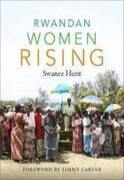
On April 6, 1994, violence broke out in Rwanda, with Hutu killing Tutsi. The violence began as a response to the shooting of President Juvenal Habyarimana’s plane at about 8:30 pm on April 6 and killed all on board. It degenerated into a genocide that lasted for one hundred days and left approximately eight hundred thousand people dead. This genocide has been the subject of extensive study and documentation.1 In Rwandan Women Rising, Swanee Hunt adds to this literature by exploring how Rwandan women rose from helpless victims to powerful and influential positions of leadership that enabled them to be at the forefront of helping their country rise from the ashes. Drawing on hundreds of conversations with mostly women and a few men over a period of sixteen years, Hunt brings forth the women’s stories both during and after the massacre. She lets Rwandan women share their stories in their own words.
This gives the reader a vivid picture of the events and experiences during the massacre and in its aftermath. Her main thrust is that the genocide and its aftermath provided space and opportunities for Rwandan women to rise to prominent positions, especially as they engaged in talks, reconciliation work, and took up positions in both government structures and the private sector. But how was this possible and what was the context?
‘From Ashes to the Top’: Rwanda Genocide and Promotion of Women Pamela Khanakwa
Le 6 avril 1994, des violences éclatent au Rwanda, des Hutu tuant des Tutsi. Les violences ont commencé en réponse au tir de l'avion du président Juvénal Habyarimana vers 20h30 le 6 avril et ont tué tous les passagers à bord. Elle a dégénéré en un génocide qui a duré cent jours et a fait environ huit cent mille morts. Ce génocide a fait l'objet d'une étude et d'une documentation approfondies.1 Dans Rwandan Women Rising, Swanee Hunt ajoute à cette littérature en explorant comment les femmes rwandaises sont passées de victimes impuissantes à des positions de leadership puissantes et influentes qui leur ont permisêtre à l'avant-garde pour aider leur pays à renaître de ses cendres. S'appuyant sur des centaines de conversations avec principalement des femmes et quelques hommes sur une période de seize ans, Hunt présente les histoires des femmes pendant et après le massacre. Elle permet aux femmes rwandaises de partager leurs histoires avec leurs propres mots.
Cela donne au lecteur une image vivante des événements et des expériences pendant le massacre et ses conséquences. Son principal objectif est que le génocide et ses conséquences ont fourni un espace et des opportunités aux femmes rwandaises pour accéder à des postes de premier plan, en particulier lorsqu'elles se sont engagées dans des pourparlers, des travaux de réconciliation et ont prispostes dans les structures gouvernementales et dans le secteur privé. Mais comment cela a-t-il été possible et dans quel contexte ?
Keywords
Statistics
- Abstract views
- 339
- Downloads
- 168
Citations
0 citations
Citations counted by OpenAlex, an open index of scholarly literature, updated weekly. Google Scholar may count more.
- AFRICA in the INDIAN Imagination: Race and the Politics of Postcolonial Citation Antoinette BURTON
- Shaping the Post-Apartheid Landscape in South Africa: The making of the Black Middle Class Garth le Pere Roger Southall
- The Horn Breaks African State Norms Teshale Tibebu Christopher Clapham
- La santé dans les pays du sud à l’épreuve de la mondialisation Yamina Rahou