
Articles · Vol. 11 No 1 (2015): Revue africaine des Livres, volume 11, n° 1, 2015
Nigeria’s Iron Lady
- DOI https://doi.org/10.57054/arb.v11i1.5034
- Publiée 2015-01-09
Résumé
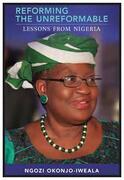
On the sidelines of the World Economic Forum (WEF) in Cape Town in March 2013, I chaired a book launch starring Nigeria’s formidable first female finance minister, Ngozi Okonjo-Iweala, resplendent in her trademark African traditional
dress and matching head-gear. She talked unpretentiously, without the affected foreign accent of some Nigerians
that have spent two decades abroad. She had recently published a book titled Reforming the Unreformable on her time – between 2003 and 2006 – as finance minister of Africa’s largest economy, the world’s eighth most populous state, and its sixth largest oil-producer. She had been the architect of the deal to pay off Nigeria’s $30 billion debt (the second largest such debt deal with the Paris Club of creditors at the time), and led a team of technocratic reformers seeking to tackle corruption, build efficient public and private institutions, obtain Nigeria’s first sovereign debt rating, and transform the
country into an emerging economy.
Mots-clés
Statistiques
- Consultations du résumé
- 119
- Téléchargements
- 124
Citations
0 citations
Citations recensées par OpenAlex, base ouverte de la littérature scientifique, mise à jour chaque semaine. Google Scholar peut en compter davantage.
Dans le même numéro
Vol. 11 No 1 (2015): Revue africaine des Livres, volume 11, n° 1, 2015 →- FULL ISSUES journal system
- Postcolonial Constructivism: Ali Mazrui’s Theory of Inter-Cultural Relations? Seifudein Adem
- The Great Lakes Region and Southern Africa in Historical and Contemporary Perspective Murindwa-Rutanga
- Salvaging Mogadishu from Ruin and Rubble Nuruddin Farah