
Articles · Vol. 11 No. 1 (2015): Africa Review of Books, Volume 11, n° 1, 2015
Nigeria’s Iron Lady
- DOI https://doi.org/10.57054/arb.v11i1.5034
- Published 2015-01-09
Abstract
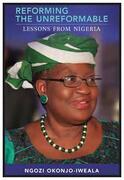
On the sidelines of the World Economic Forum (WEF) in Cape Town in March 2013, I chaired a book launch starring Nigeria’s formidable first female finance minister, Ngozi Okonjo-Iweala, resplendent in her trademark African traditional dress and matching head-gear. She talked unpretentiously, without the affected foreign accent of some Nigerians that have spent two decades abroad. She had recently published a book titled Reforming the Unreformable on her time – between 2003 and 2006 – as finance minister of Africa’s largest economy, the world’s eighth most populous state, and its sixth largest oil-producer. She had been the architect of the deal to pay off Nigeria’s $30 billion debt (the second largest such debt deal with the Paris Club of creditors at the time), and led a team of technocratic reformers seeking to tackle corruption, build efficient public and private institutions, obtain Nigeria’s first sovereign debt rating, and transform the country into an emerging economy.
Nigeria’s Iron Lady
On the sidelines of the World Economic Forum (WEF) in Cape Town in March 2013, I chaired a book launch starring Nigeria’s formidable first female finance minister, Ngozi Okonjo-Iweala, resplendent in her trademark African traditional
dress and matching head-gear. She talked unpretentiously, without the affected foreign accent of some Nigerians
that have spent two decades abroad. She had recently published a book titled Reforming the Unreformable on her time – between 2003 and 2006 – as finance minister of Africa’s largest economy, the world’s eighth most populous state, and its sixth largest oil-producer. She had been the architect of the deal to pay off Nigeria’s $30 billion debt (the second largest such debt deal with the Paris Club of creditors at the time), and led a team of technocratic reformers seeking to tackle corruption, build efficient public and private institutions, obtain Nigeria’s first sovereign debt rating, and transform the
country into an emerging economy.
Keywords
Statistics
- Abstract views
- 119
- Downloads
- 124
Citations
0 citations
Citations counted by OpenAlex, an open index of scholarly literature, updated weekly. Google Scholar may count more.
- FULL ISSUES journal system
- Postcolonial Constructivism: Ali Mazrui’s Theory of Inter-Cultural Relations? Seifudein Adem
- The Great Lakes Region and Southern Africa in Historical and Contemporary Perspective Murindwa-Rutanga
- Salvaging Mogadishu from Ruin and Rubble Nuruddin Farah