
Articles · Vol. 12 No. 2 (2016): Africa Review of Books, Volume 12, n° 2, 2016
Borders as Bridges, not Barriers
- DOI https://doi.org/10.57054/arb.v12i2.5022
- Published 2016-06-14
Abstract
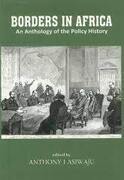
In the year 1960 alone, a total of 17 African countries gained flag independence, followed in quick succession by many others in the following years, invariably validating the euphoria that the 1960s was the decade of independence for Africa.With a plethora of former colonial possessions of European countries gaining independence, there was palpable anxiety,if not outright expectation, that the new African nation-states would explode, combust and convulse violently in an orgyof inter-state bloodbath on a continental scale. It was apparent that the territorial states that colonial adventure had created and bequeathed to Africans were anything but durable,1 and the boundaries that separated or ‘sliced’ (apologies to Nobel Laureate, Professor Wole Soyinka) them into new nation-states were not only artificial and arbitrary but had scant regard for ethnographic realities on the ground, often splitting or sundering the same peoples between several territorial states and corralling diverse and hitherto un-integrated ethnic nations into the same compact. Hence what Professor Anthony Asiwaju has famously referred to as ‘partitioned Africans.’
Borders as Bridges, not Barriers
Au cours de la seule année 1960, un total de 17 pays africains ont obtenu l'indépendance du drapeau, suivis en succession rapide par de nombreux autres dans les années suivantes, validant invariablement l'euphorie selon laquelle les années 1960 étaient la décennie de l'indépendance de l'Afrique. Avec une pléthore d'anciennes possessions coloniales de pays européens accédant à l'indépendance, il y avait une anxiété palpable, sinon une attente pure et simple, que les nouveaux États-nations africains explosent, brûlent et se convulsent violemment dans une orgie de bain de sang interétatique à l' échelle continentale. Il était évident que les États territoriaux que l'aventure coloniale avait crééset légués aux Africains étaient tout sauf durables1, et les frontières qui les séparaient ou les «tranchaient» (excuses au prix Nobel, le professeur Wole Soyinka) en de nouveaux États-nations étaient non seulement artificielles et arbitraires, mais ne tenaient guère compte des réalités ethnographiques sur le terrain, divisant ou séparant souvent les mêmes peuples entre plusieurs États territoriaux et rassemblant des nations ethniques diverses et jusqu'ici non intégrées dans le même pacte. D'où ce que le professeur Anthony Asiwaju a qualifié d '"Africains partitionnés".
Keywords
Statistics
- Abstract views
- 138
- Downloads
- 128
Citations
0 citations
Citations counted by OpenAlex, an open index of scholarly literature, updated weekly. Google Scholar may count more.
- Rage Against that Good Night Wole Soyinka
- Italian Massacres in Occupied Ethiopia Ian Campbell
- Development and Governance David Booth et al.
- The Ambiguous Role of the Intellectual as Statesman Adekeye Adebajo